
The Emperor penguin, or Aptendodytes forsteri, is a species of penguin that lives in Antartica. They appear very similar to the King penguin, with the main difference being the color of the patches of feathers near their necks and ears. The Emperor penguin has yellow feathers while the King penguin has orange feathers.
The Emperor penguin is the biggest penguin in the world. The height of an Emperor penguin ranges from 3.28 to 3.94 feet (100 to 120centimeters) and can weigh from 48.5 to 99.2 pounds (22 to 45 kg). They are carnivores that feed mainly on fish, but also eat squid and krill.

The Emperor penguin outclasses all other penguins when it comes to diving into the water. This is because the Emperor penguin has special adaptations that help it swim longer and go deeper than even humans naturally could. One adaptation they have is the ability to store oxygen. Before diving underwater, Emperor penguins are able to double their heart rate and breath in more oxygen. They then store this oxygen and dive in, allowing them to stay underwater and hold their breaths for 22 minutes. Emperor penguins are also able to withstand the effects of pressure seen in deeper levels of the ocean. This lets them dive as far down as 1,800 feet (550 meters) under the water to find food. no other penguin can go as far down as the Emperor penguin can.
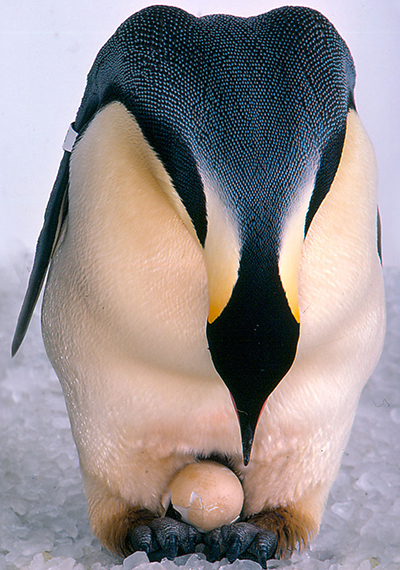
Emperor penguins don't make nests for their eggs. They lay them on the ice and then the male Emperor penguin keeps it warm with its brooding patch, a part of the body that all penguins have. It can take about teo months for the eggs for hatch. During this time, male penguins huddle together and endure the harsh elements of Antartica all the while not having any food to eat. Once the females get back, they feed the recently hatched chicks by regurgitaing the food they had gotten while away. The males are then able to find their own food once the females get back. Chicks are able to find their own food after 5-6 months.